The video examines China’s recent quantum computing developments, highlighting ambitious claims about qubit numbers and capabilities that may be exaggerated or not practically useful, while emphasizing that true progress remains uncertain. It also critiques the focus on large-scale quantum systems and hybrid approaches, suggesting that meaningful, scalable quantum applications are still an unresolved challenge, contrasting skepticism about some claims with a personal promotion of a verified star map gift service.
The video discusses recent developments in China’s quantum computing efforts, highlighting numerous announcements from Chinese companies. Notably, researchers from the University of Science and Technology in China claimed their quantum computer, Su Chongqi 3, is comparable to Google’s Willow chip with about 105 qubits. This caused concern in the U.S., as experts feared China might be gaining an edge in quantum technology. However, the speaker questions the significance of some of these claims, pointing out that having many qubits doesn’t necessarily mean having a practical, functional quantum computer.
Chinese company Origin Quantum announced their TNG 4.0 platform capable of handling over 500 qubits. They claim to have already run millions of tasks for a large number of users worldwide, though the speaker is skeptical about these figures, suggesting they could be exaggerated or meaningless without understanding the actual utility of such tasks. The video emphasizes that the number of people using a quantum computer doesn’t necessarily indicate its technological progress or usefulness.
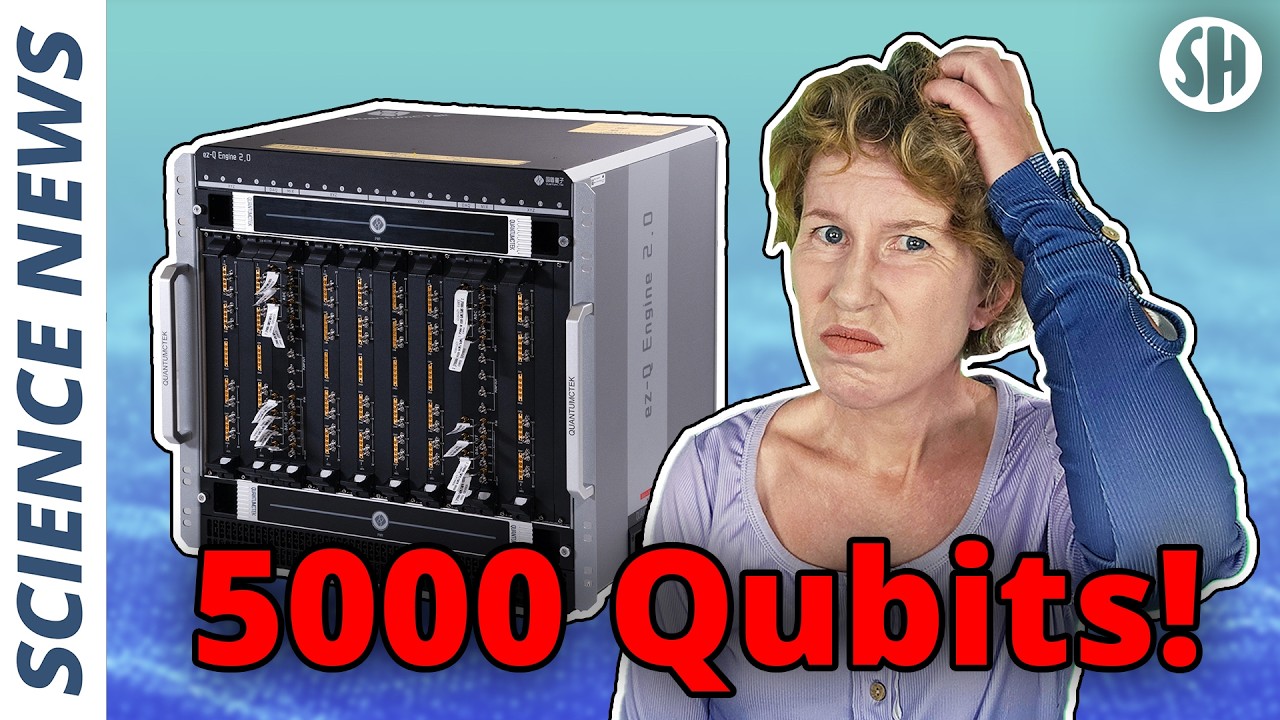
Another major claim is China’s plan to develop a quantum computer called Easy Q Engine 2.0, projected to reach 5,000 qubits. This is compared to IBM’s recent announcement of a 1,000-qubit chip called Condor and plans for a 100,000-qubit system, although these are still conceptual and unproven. The speaker notes that controlling and doing meaningful work with such large numbers of qubits remains a significant challenge, and no company has demonstrated the ability to operate these systems at a useful level yet.
The video also discusses China’s push to commercialize quantum computing for industrial applications, such as hybrid quantum-classical methods in image analysis. However, the speaker critiques these efforts by highlighting that hybrid approaches often don’t leverage quantum advantages and can be simulated with classical computers. The broader point is that scalability and practical utility in quantum computing are still unresolved problems, raising questions about China’s aggressive investments and ambitions in this area.
Finally, the narrator diverts briefly to promote a star map gift service from Underlucky Stars, illustrating their wedding anniversary with a personalized star map that accurately depicts the night sky from a specific date and location. This segues into a lighthearted note on gift ideas, emphasizing that the star maps are carefully calculated and verified. The overall tone combines skepticism about current quantum claims with an appreciation for meaningful, verifiable achievements, alongside a personal plug for the gift service.