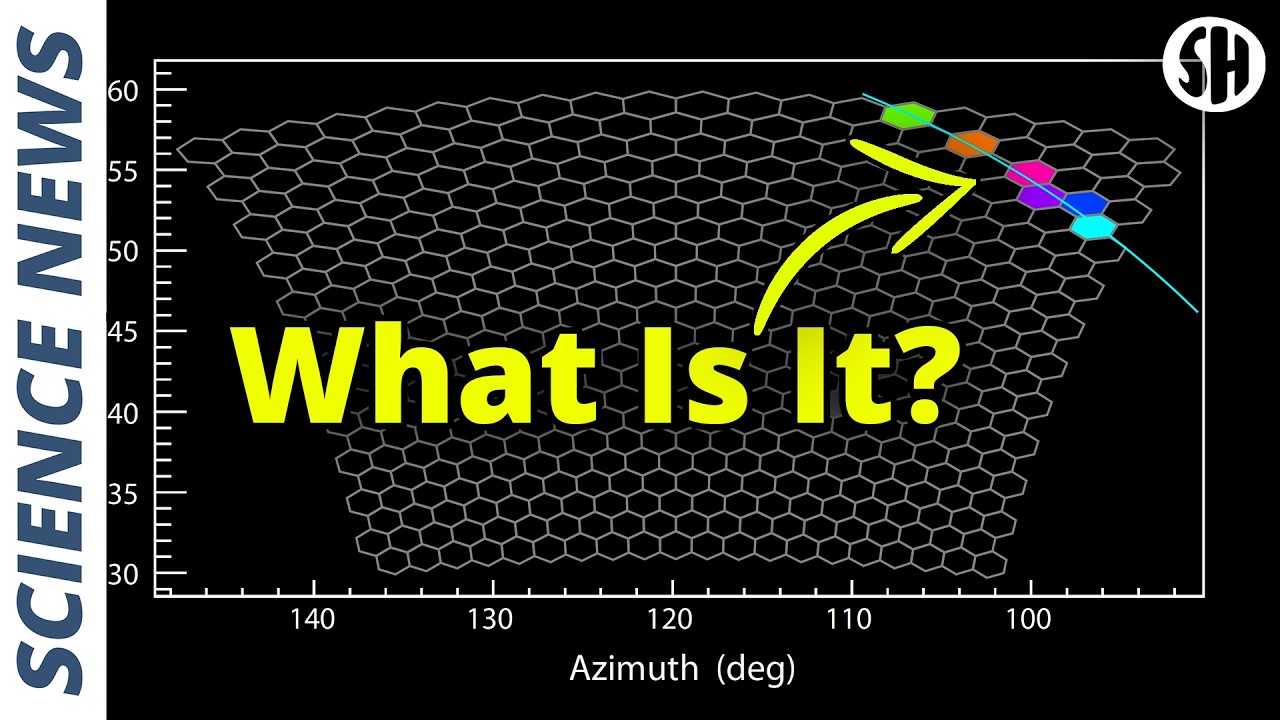
The video discusses an intriguing anomaly detected by the Anita experiment, which is an atmospheric detector based on a balloon at about 40 km altitude in Antarctica. This experiment searches for ultra-high-energy cosmic rays and neutrinos by detecting radio signals from particle interactions in ice. During its flights, Anita observed two unusual upward-moving radio bursts at energies vastly exceeding those produced by human-made colliders, an observation that challenges existing physics understanding.
Typically, cosmic ray showers originate from particles coming from space and hitting the Earth’s atmosphere, creating secondary particles that mostly travel downward. However, Anita detected events where particles appeared to burst out of the ice and move upward—an unexpected and puzzling phenomenon. The energies involved were around 10^18 electron volts, far surpassing energies produced by the Large Hadron Collider, prompting questions about what could produce such events.
Initially, a plausible explanation was that high-energy neutrinos from the opposite side of the Earth interacted with the ice and produced the upward-moving particles. Neutrinos rarely interact, so a neutrino passing through the Earth and causing such a wake-up event seemed feasible. However, subsequent studies by the Pierre Auger Observatory in Argentina, which has a different detection method, analyzed 15 years of data, expecting to find multiple similar events if the neutrino explanation were correct. Their results showed only one event, which was statistically unlikely to be the same as Anita’s, effectively ruling out the neutrino hypothesis.
With the most conservative explanation dismissed, the possibility remains that these anomalies could signify new physics beyond the Standard Model. Some hypotheses include the existence of previously undetected particles, sterile neutrinos, or dark matter decay processes. Other less likely ideas involve unusual refraction effects in ice. The overall conclusion is that these observations could represent the first hints of new physics, opening an exciting frontier for scientific investigation, even though the data analysis so far is preliminary and not definitive.
The speaker emphasizes the importance of problem-solving skills and promotes Brilliant, an online platform offering interactive courses in science, math, and computer science to develop such skills. They highlight their own course on quantum mechanics and offer a promotional discount for viewers. The video concludes by encouraging viewers to explore these educational resources to enhance their scientific thinking and problem-solving abilities, leaving open the exciting potential that anomalies like these could herald breakthroughs in physics.