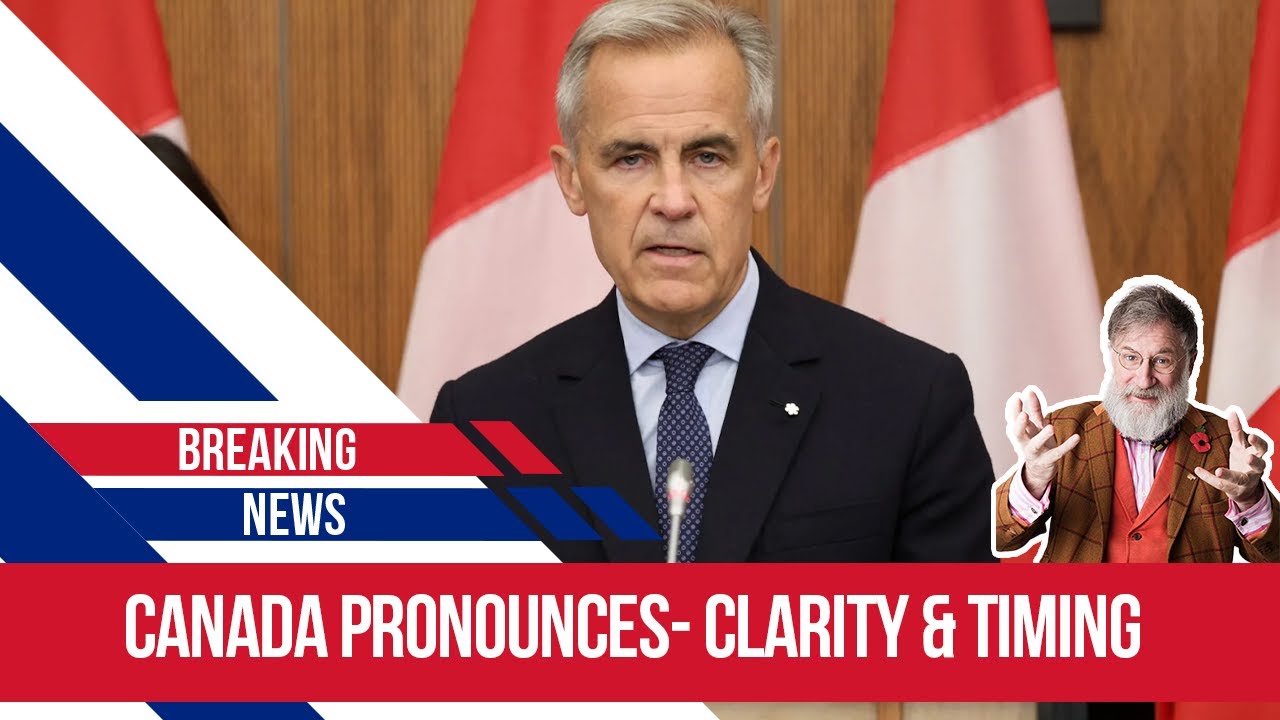
Canada’s Prime Minister Mark Khan announced that the country will recognize a Palestinian state at the United Nations, marking a significant shift in Canadian foreign policy and the broader Western stance on the Middle East. The decision is presented as measured yet assertive, with Canada’s language emphasizing the urgent human suffering in Gaza and condemning Israel’s actions to prevent a humanitarian catastrophe. Khan highlighted the erosion of the two-state solution, pointing to Israeli settlement expansion, settler violence, and legislative efforts to annex parts of the West Bank as signs that the previous strategy of prolonged negotiations is no longer viable.
This move contrasts sharply with British Prime Minister Starmer’s more cautious approach, which conditions recognition on specific Israeli commitments such as a ceasefire, halting annexation, and easing aid access. Canada’s recognition, by contrast, is framed around what the Palestinian Authority should do — focusing on aspirations like future elections, governance reforms, and demilitarization — rather than preconditions linked to Israeli actions. Although critics argue that Palestinian elections by 2026 are unlikely given Gaza’s devastation and political instability, Canada views recognition as a means to preserve hope and prevent the two-state solution from being completely eroded.
Canada’s decision is seen as a bold attempt to salvage diplomacy amid increasing despair. By symbolically recognizing Palestine, Canada aims to shift diplomatic expectations and avoid the complete collapse of the two-state paradigm amid ongoing violence and settlement expansion. It’s an effort to provide Palestinians and Israelis with a pathway that sidesteps permanent occupation or perpetual conflict, offering a form of moral and political support rooted in a belief in the possibility of future progress. The move underscores Canada’s intention to uphold the dignity, security, and aspirations of both peoples, despite the difficult realities on the ground.
Reactions from Israel and other Western leaders have been predictable but intense. Israel’s embassy in Ottawa accused Canada of rewarding Hamas, despite Canada’s clear condemnation of the group and its exclusion from future governance. U.S. President Trump also responded negatively, using a veiled trade threat to suggest that recognition could complicate trade relations. Nonetheless, Canadian officials like Carney remain committed, emphasizing Canada’s role as a defender of human dignity and aligning with leaders like France’s Macron and Australia’s treasurer who have also signaled support for Palestinian recognition.
Overall, this move by Canada represents a subtle but significant inflection point in Western policy. It is a deliberate pivot away from passive neutrality and paralysis, acknowledging the urgency of the human crisis. While recognition alone cannot solve the complex issues of occupation or hostage negotiations, it shifts diplomatic weight and suggests that Western countries will no longer wait indefinitely. Canada’s principled stance aims to restore a sense of hope and possibility, even in a world increasingly characterized by silence and hesitance in the face of ongoing suffering and political turmoil.