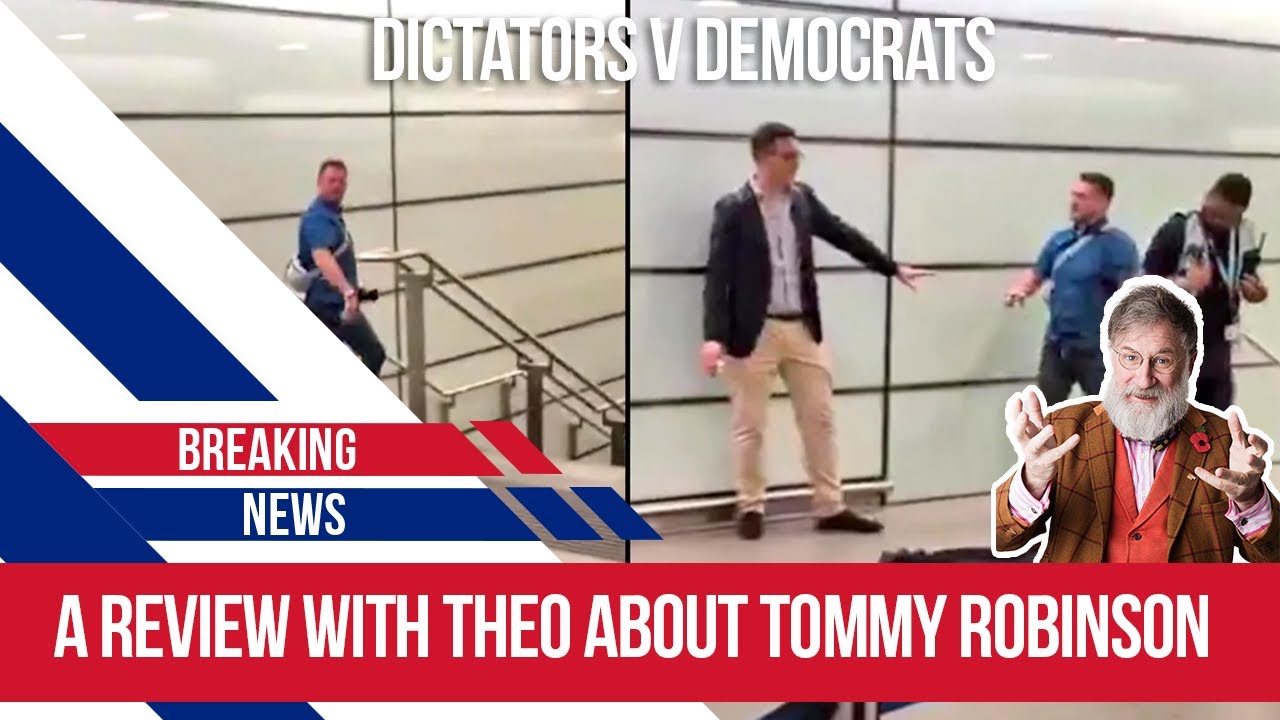
This interview features Theo discussing recent issues surrounding Tommy Robinson, including an incident where Robinson was involved in a confrontation resulting in a man being knocked unconscious. Theo expresses concern about the delay in police response, noting it took around 10 minutes for officers to arrive, during which no support was provided to the victim. He emphasizes that such delays are unacceptable, especially in violent situations, and questions the apparent lack of immediate security at the scene, raising broader concerns about safety and policing effectiveness.
Theo, a former police officer turned journalist, explains the complexities of policing and legal procedures in such cases. He points out that releasing CCTV footage from ongoing investigations can interfere with legal proceedings and potentially prejudice a jury, hence restrictions are in place. He also highlights that footage might leak regardless, referencing similar incidents like police assaults at Manchester Airport. Theo stresses that ongoing cases are protected by law from public discussion, which complicates transparency and public understanding of events.
The conversation shifts to the legal system and social media’s influence on trials. Theo criticizes the outdated nature of the jury system, noting that jurors are exposed to extensive social media coverage, which can affect their impartiality. He underscores the difficulty of maintaining a fair trial amid rampant online commentary and advances the idea that such a situation is increasingly unrealistic in today’s digital age. The difficulty of discussing active legal cases without risking bias or compromising proceedings is a recurring theme.
Regarding Robinson’s fleeing the country and the public’s perception, Theo finds it suspicious that Robinson seems to have left before the case is resolved, despite claims from associates that he called police before leaving. He notes the oddity of Robinson’s potential plans to return, considering his history of legal issues and previous incidents. Theo suggests the timing and similarities to past events may raise questions, but refrains from speculation, emphasizing the importance of relying on available information while acknowledging the limitations imposed by ongoing legal processes.
Finally, Theo addresses broader issues of policing and societal safety. He criticizes the current state of police recruitment and resources, noting the unattractive working conditions, low pay, and long, exhausting shifts faced by officers. He laments the decline of a once-aspired-to career and points out high attrition rates, which leave many stations under-policed and security levels insufficient. He concludes with a nostalgic remark about the historical respect for police and train drivers, contrasting it with the current challenges facing the police force and public safety infrastructure.