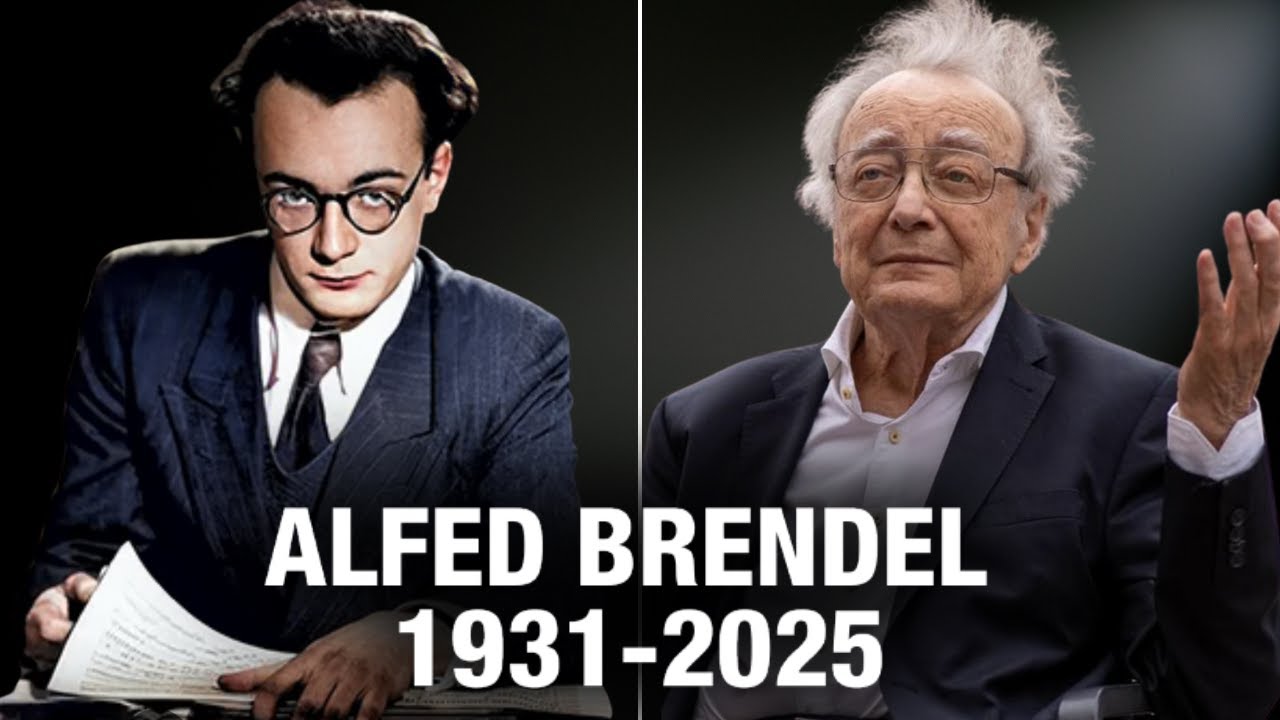
The speaker mourns the passing of Alfred Brendel, highlighting his profound influence on culture as a pianist, musician, writer, and poet. Brendel’s work exemplified the deep human experience captured through humor, paradox, and seriousness intertwined with unseriousness, emphasizing the importance of authenticity and timing in life and art. His contributions extended beyond music, offering insights into the value of living genuinely and developing over time, which the speaker sees as often corrupted in contemporary consumerist culture.
The speaker shares a personal connection to Brendel, describing a long-standing desire to write to him that remained unfulfilled for many years. Despite only meeting Brendel once in person, they learned from friends that Brendel and his partner were somewhat aware of the speaker’s admiration. This highlights the reverence many hold for Brendel’s artistry and philosophical approach to music, which continues to inspire even those who never had personal contact with him.
Brendel’s musical evolution is celebrated as extraordinary, particularly his recorded performances of Beethoven’s late sonatas, where his interpretation improved markedly over decades. The speaker points to his late recordings, especially of Mozart’s Sonata K533 and his final performances, as evidence of an ongoing, even biological, development as a musician. Brendel’s late style exemplifies how an artist can continue to grow and refine their craft well into old age, subtly suggesting the possibility of artistic development until extreme old age.
The discussion then focuses on Brendel’s core musical values: rhythmical strength and the long, continuous line that sustains musical tension from beginning to end. He believed in nuanced psychological momentum rather than metronomic accuracy, emphasizing that true musical mastery involves maintaining tension and momentum throughout a performance. He also valued objectivity in interpretation, understanding that great scores inherently demand multiple, sometimes conflicting, approaches within a certain interpretive space, challenging musicians to develop their own vision without overshadowing the composer’s intentions.
Finally, the speaker underscores Brendel’s connection to his teacher Edwin Fischer, portraying Fischer as a master of unmediated emotional expression who embodied a deep, authentic musicality. This link to Fischer enriches Brendel’s legacy and reminds us of the importance of genuine artistic expression, especially in a culture marked by alienation and dissolution. The speaker invites viewers to continue exploring Brendel’s work through a dedicated YouTube channel and expresses heartfelt condolences to Brendel’s family and admirers, emphasizing the enduring significance of his contributions to music and culture.