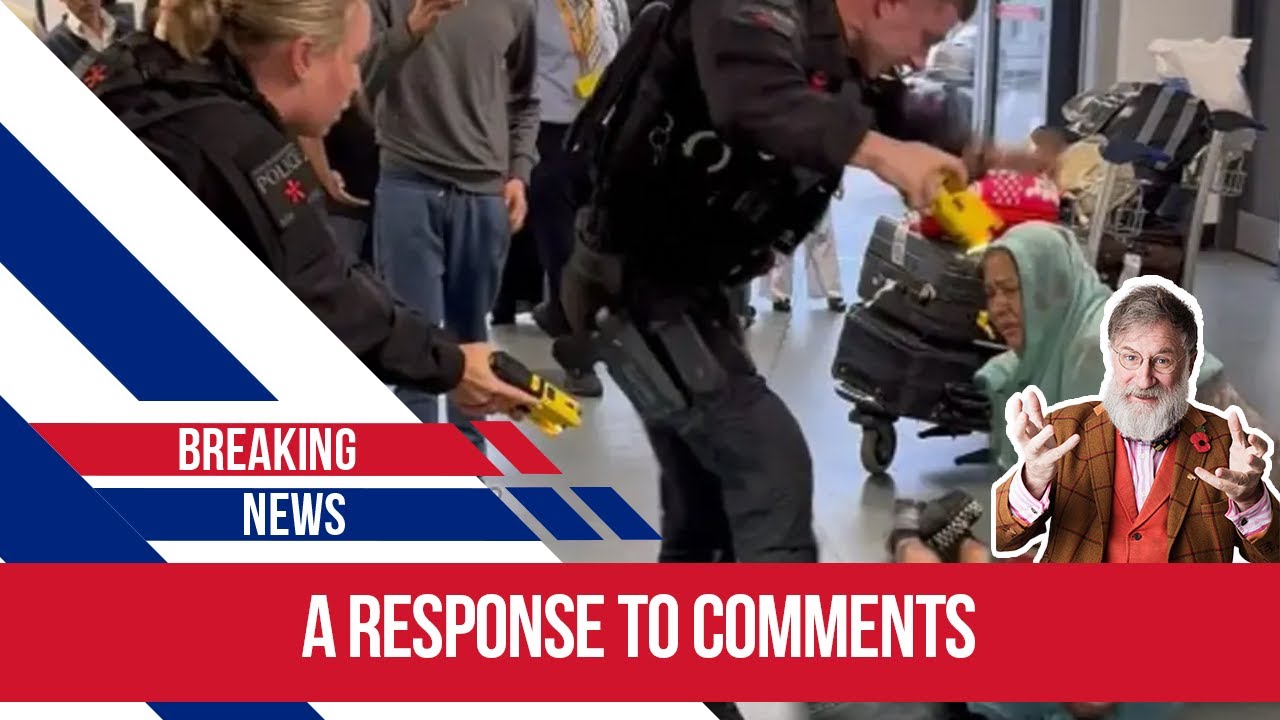
The speaker emphasizes the fundamental moral principle that two wrongs do not make a right, a concept that predates legal systems and is central to justice. This principle underscores that no provocation justifies disproportionate or unlawful responses, and it has been challenged or ignored in reactions to the Manchester airport trial involving police and suspects. The speaker wants to clarify that moral accountability and justice should be upheld regardless of ethnicity or background.
Addressing a specific comment, the speaker defends the judge’s instruction to exclude certain police conduct from the jury’s consideration, noting that the public, unlike jurors, has a duty to assess the broader context of law enforcement actions. They argue that both the headbutt and the kick are assaults, and it is dishonest to dismiss police misconduct as irrelevant, especially when the officer’s actions after restraint are involved. The speaker stresses that police abuse of power is just as dangerous as street violence because it undermines trust in the justice system.
The speaker then acknowledges a sympathetic view that the police officer may have acted out of anger, especially after witnessing injuries to a colleague. While understanding the instinct to protect fellow officers, they assert that justice is about following rules, not emotions. They warn against excusing violence in the name of emotion, comparing it to historical instances where unlawful actions in retaliation undermined rule of law. The call is for transparent disciplinary measures that hold officers accountable without demonizing them, emphasizing that ethical standards apply to all, regardless of their role.
The final, more impassioned comments focus on the importance of public scrutiny and the dangers of blind trust in law enforcement. The speaker rejects the idea that police officers should always be given the benefit of the doubt, viewing such unconditional trust as a pathway to authoritarianism. They highlight that clear misconduct, like a police kick to a restrained individual, needs no ambiguity. The public, acting as informed citizens, has a duty to question and demand accountability, especially when historical examples show that unchecked authority or perceived confusion does not justify violence.
In conclusion, the speaker reiterates that both street thugs and police officers must be held to high standards. Both the assault from a suspect and the excessive force by an officer deserve scrutiny, and society must not ignore brutality, regardless of who commits it. They emphasize that society’s standards are vital for maintaining trust and integrity in law enforcement. The message is clear: a serious country cannot overlook misconduct as if it is invisible, and the refusal to uphold standards risks damaging the nation’s moral and legal fabric.