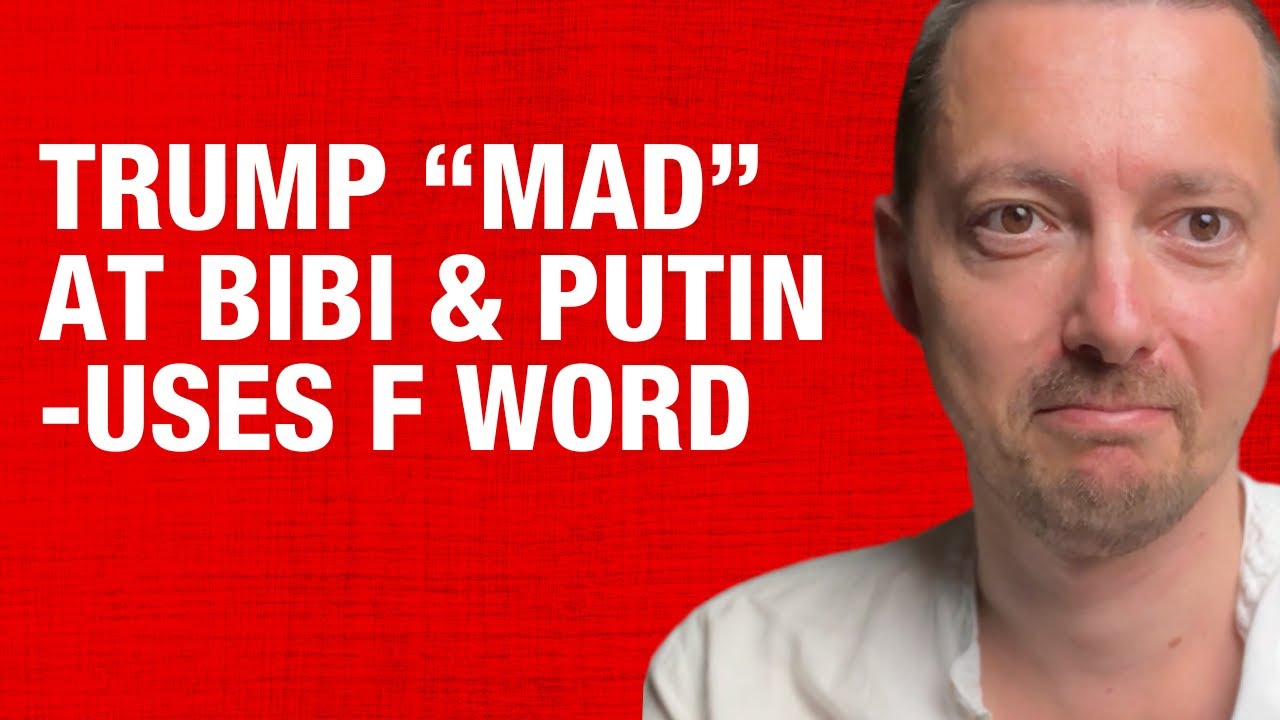
The video explains that Donald Trump’s anger towards Netanyahu and Putin is often misunderstood. His frustration is not just transient or superficial, but rooted in complex emotional and psychological dynamics. Trump’s anger appears during moments of tension with Netanyahu and Putin, but it is primarily a reflection of a deeper, unstable dependence on these figures, rather than mere personal displeasure. This emotional reaction is linked to his narcissistic tendencies and his need for recognition, power, and validation from these allies.
Trump’s interactions with Netanyahu and Putin are characterized by a mutual exploitation of narcissistic dependence. Both Netanyahu and Putin are skilled at manipulating Trump’s ego, especially by emphasizing their own historical significance and importance as world leaders. Netanyahu, in particular, is seen as more manipulative because he can speak Trump’s language more directly about legacy and history, fueling Trump’s ego. Although Putin is less overtly narcissistic, he also seeks to exploit Trump, viewing him as a ripe target for influence. Trump, in turn, craves their validation as powerful figures who can elevate his status.
The core of Trump’s anger is tied to his perception of disrespect within these relationships, which are described as marriages of narcissistic dependency. Both Netanyahu and Putin play roles in providing Trump’s emotional and psychological needs, and any perceived disrespect threatens that fragile balance. His anger towards them is thus not just about specific policies or disagreements but about feeling unvalued and disrespected within these “marriages.” These relationships are so vital to Trump that any insult or slight feels personal and threatening, even though the underlying dependency remains.
The analysis suggests that this anger is “ephemeral,” meaning it is temporary and context-dependent, but also “real” because it stems from genuine feelings of being disrespected. However, these feelings are rooted in a deeper psychological dynamic that sustains his reliance on Netanyahu and Putin. For a break in these relationships to occur—such as a literal divorce—Trump would need to undergo a significant internal transformation to sever his narcissistic dependency. Such a fracture would be a major, painful upheaval and is not something likely to happen easily or quickly.
Ultimately, the speaker emphasizes that Trump’s current anger is an ongoing expression of his dependence on Netanyahu and Putin. It is likely to persist unless a profound internal change occurs, which would involve Trump distancing himself from these relationships and finding new sources of validation. Until then, the anger remains a reflection of this unstable narcissistic bond, and any fractures in these alliances—though possible—would be difficult and transformative. The situation is thus complex, driven by psychological needs as much as political tensions.