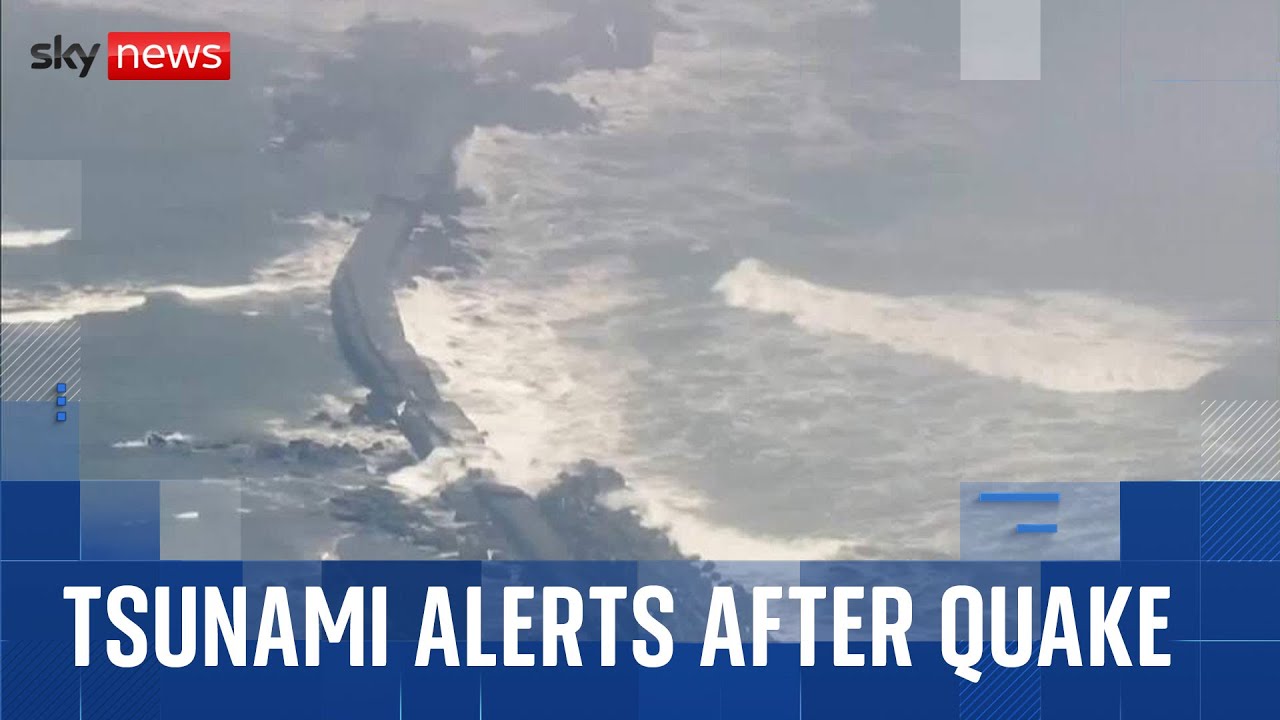
The video reports on a recent earthquake off Russia’s Far East that prompted immediate evacuations and widespread disruptions. Footage shows people leaving buildings, with some requiring medical assistance and reports of damaged infrastructure. Power outages and phone service failures have been noted in the area, and officials warn that aftershocks of up to 7.5 magnitude could continue for up to a month. These ongoing tremors have affected daily life, including at hospitals where surgeries were underway, with medical staff managing operations amidst the chaos. The regional geophysical agency highlighted the persistent threat of aftershocks impacting the region’s stability.
Tsunami warnings have been issued across the Pacific region following the quake. Alerts were activated in Japan, Alaska, and Hawaii, with the Pacific Tsunami Warning Center cautioning that waves could impact coastal areas of Chile, the Solomon Islands, and Ecuador. A tsunami watch was also put into place along the U.S. West Coast, including California, Oregon, and Washington. Residents in Hawaii, in particular, were advised to evacuate or move to higher floors in buildings at least ten stories tall. Honolulu’s mayor urged people to stay away from beaches and take tsunami warnings seriously, while authorities prepared rescue operations to respond to the potential impact.
One eye-witness account describes a British tourist’s experience during the tsunami alert off the coast of Hawaii. The tourist, Rachel Burroughs, recounted how she and others were on a tour on the Big Island when warnings first appeared on their phones. Initially, the local tour guide dismissed the danger, but as they approached the coast, the seriousness of the situation became clear. Traffic congestion increased, sirens sounded, and emergency alerts indicated the tsunami would hit in approximately three hours. Despite making it back to the cruise ship, around 600 tourists did not return in time and had to seek higher ground, highlighting the real danger and chaos caused by the event.
Tsunami expert Dave Snder from the U.S. National Tsunami Warning Center explained the process of lifting warnings once the threat diminishes. He described how monitoring the wave levels and tides over several hours would determine when to downgrade the alert from a warning to an advisory, and eventually, to a green status indicating all clear. The process involves observing a sustained decrease in wave heights and tide levels, typically over a period of about three hours, after which authorities can safely end the warning. However, due to the ongoing potential for aftershocks and lingering waves, officials emphasized cautious skepticism about declaring complete safety.
Overall, the incident underscores the widespread impact of the earthquake and subsequent tsunami threats across the Pacific region. It caused significant disruption, from evacuations and infrastructural damage in Russia’s Far East to public safety measures in Hawaii and other coastal areas. The situation remains dynamic, with authorities closely monitoring wave activity and aftershocks, while communities continue to respond with caution and preparedness. The event highlights the importance of timely alerts, community awareness, and resilient emergency response systems in managing natural disaster risks on a large scale.